
California personal injury

Motorcyclerepresentation.

Riders are blamed first and believed second. We counter that narrative with evidence, for injured riders and their families across Glendale and Los Angeles.

Motorcycle on a Los Angeles street

Case focus

Bias. Liability. Injury impact.

01Direct attorney access
02No fee unless recovery
03Available 24/7
What insurers say first

“The rider was going too fast.”

Our answer 01

Speed is a measurement, not an assumption. Skid geometry, crush data, and sight-line analysis establish it.

“Lane splitting caused this.”

Our answer 02

Lane splitting is lawful in California. A lawful lane position is not evidence of negligence.

“The gear choice made it worse.”

Our answer 03

Injury causation is a medical question. We answer it with treating physicians and expert testimony.

The first hours

Protect your health.Preserve the record.

Rider injuries are frequently underestimated at the roadside, and the physical record disappears quickly. What is documented in the first hours often decides what can be proven months later.

Adrenaline masks a great deal, and internal or spinal injuries frequently present a day or two later. A same-day examination creates the medical record that ties the injury to the crash — without it, an insurer will argue something else caused it.
The machine will still be photographable next week; the roadway will not. Capture the surface, debris, fluid trails, skid marks, signage, signal timing, and the sight lines from the other driver's approach before any of it is cleared.
Do not clean, repair, or discard a helmet, jacket, or gloves. Abrasion patterns and impact damage are physical evidence of the forces involved, and they answer the gear argument before an insurer can raise it.
You are not obligated to give the other driver's insurer a recorded statement. Estimates of speed offered at the roadside are guesses, but they are quoted later as admissions. Decline politely and route the conversation through counsel.
How riders get hit

Four ways the road turns against you.

Each pattern changes what has to be reconstructed and where responsibility sits. Move through them to see what a claim actually turns on.

Across the rider's path

Left turn collisions.

A driver turns left across an oncoming motorcycle, then reports they never saw it. Closing speed and sight lines decide this case, not the driver's recollection.

What must be reconstructed

  • Approach speed and available sight distance
  • Signal timing and turn-lane position
  • Point of perception versus point of impact
01 / 04
How we work these cases

Evidence first.Assumptions last.

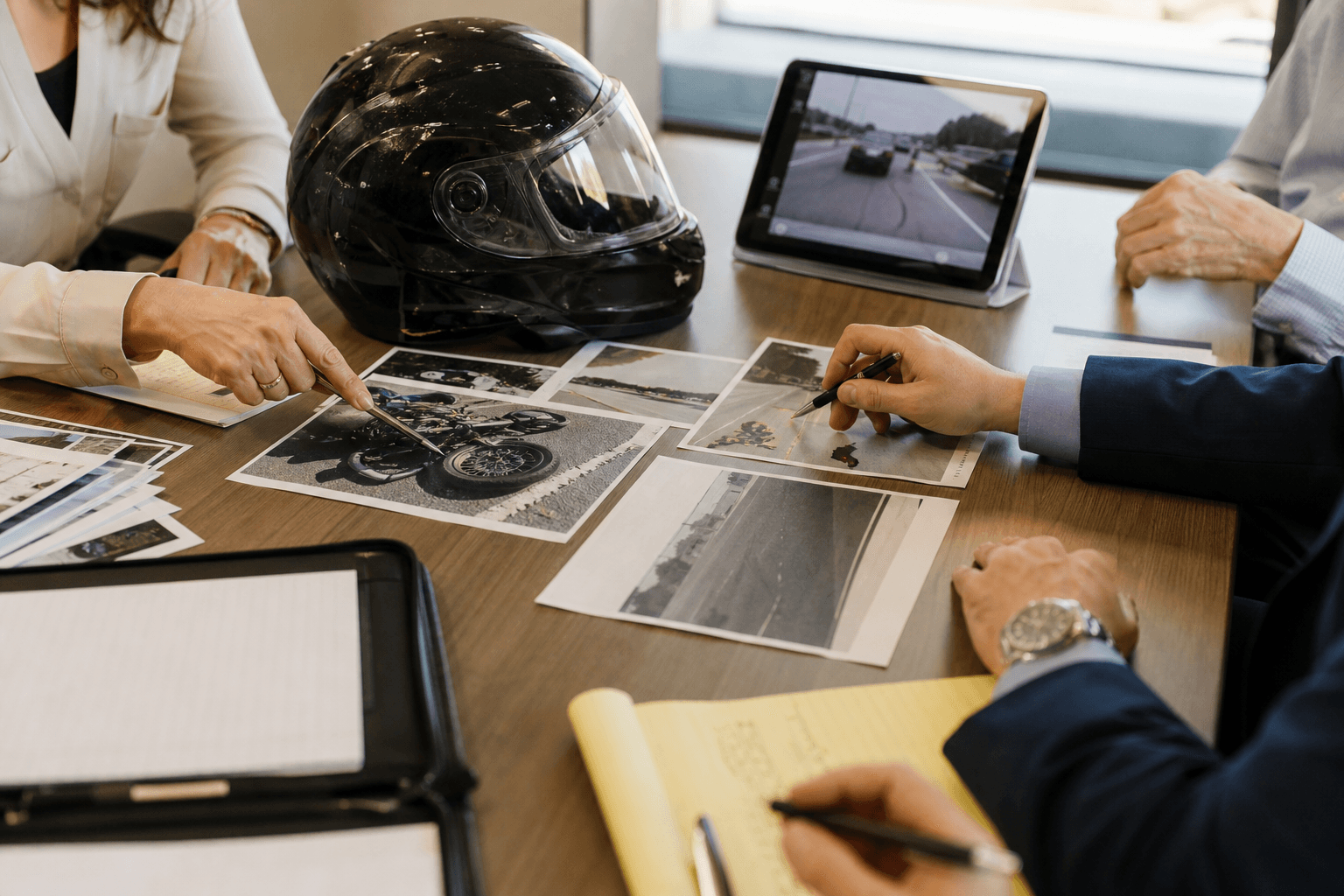
Motorcycle claims are won by replacing reflexive rider bias with a complete, physical record of the collision and its impact.

Bias mitigation strategy for a motorcycle accident claim
I

Evidentiary discipline

Bias mitigation strategy

We anticipate and counter the “rider was at fault” narrative before it takes hold, using evidence, expert testimony, and experienced legal framing.
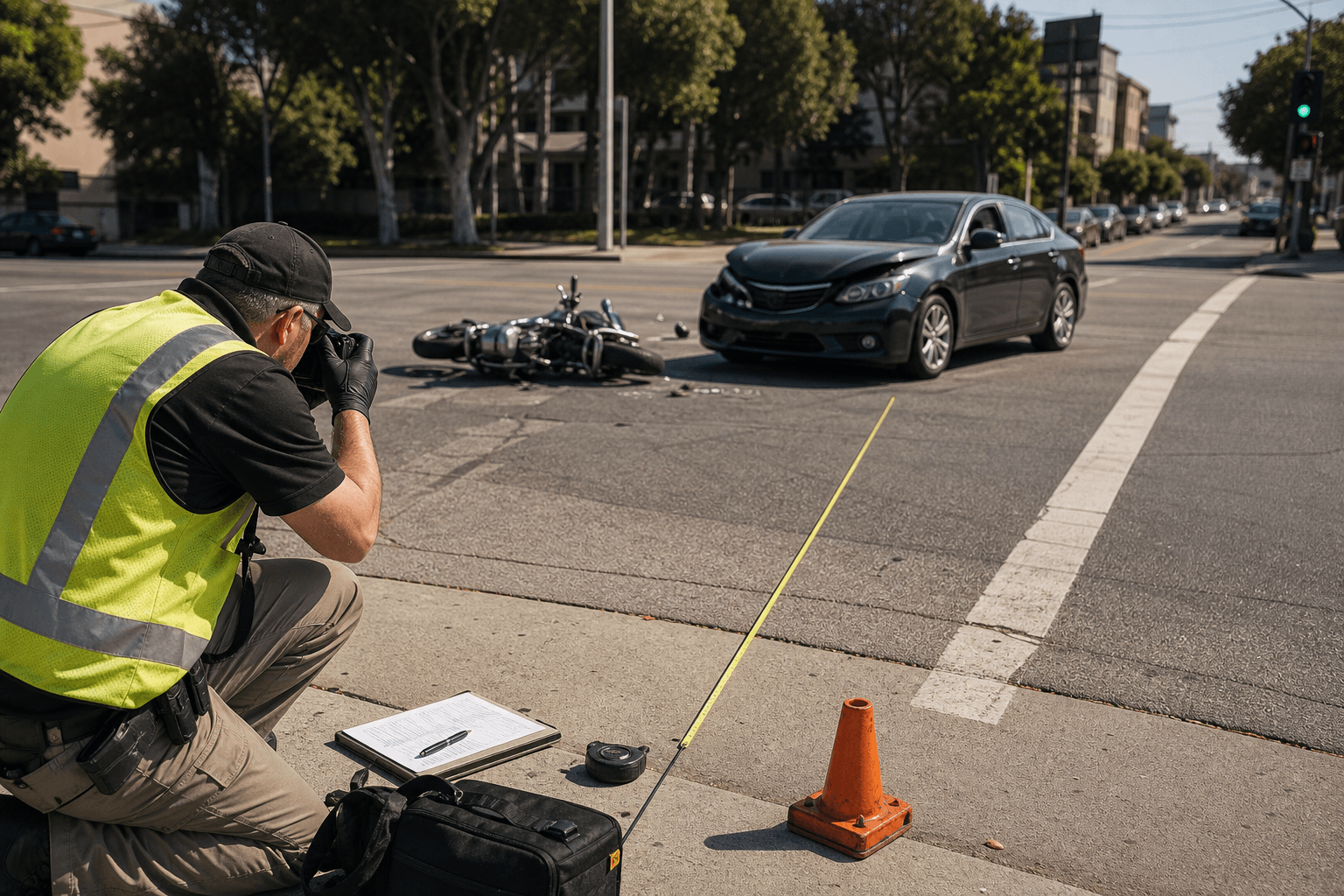
Thorough scene investigation for a motorcycle accident claim
II

Evidentiary discipline

Thorough scene investigation

We examine road conditions, sight lines, vehicle positions, and driver behavior to reconstruct what actually happened — not what was assumed.

Injury documentation for a motorcycle accident claim
III

Evidentiary discipline

Injury documentation

Road rash, orthopedic trauma, TBI, and spinal damage. We work with your medical team to document current and future care needs in full.
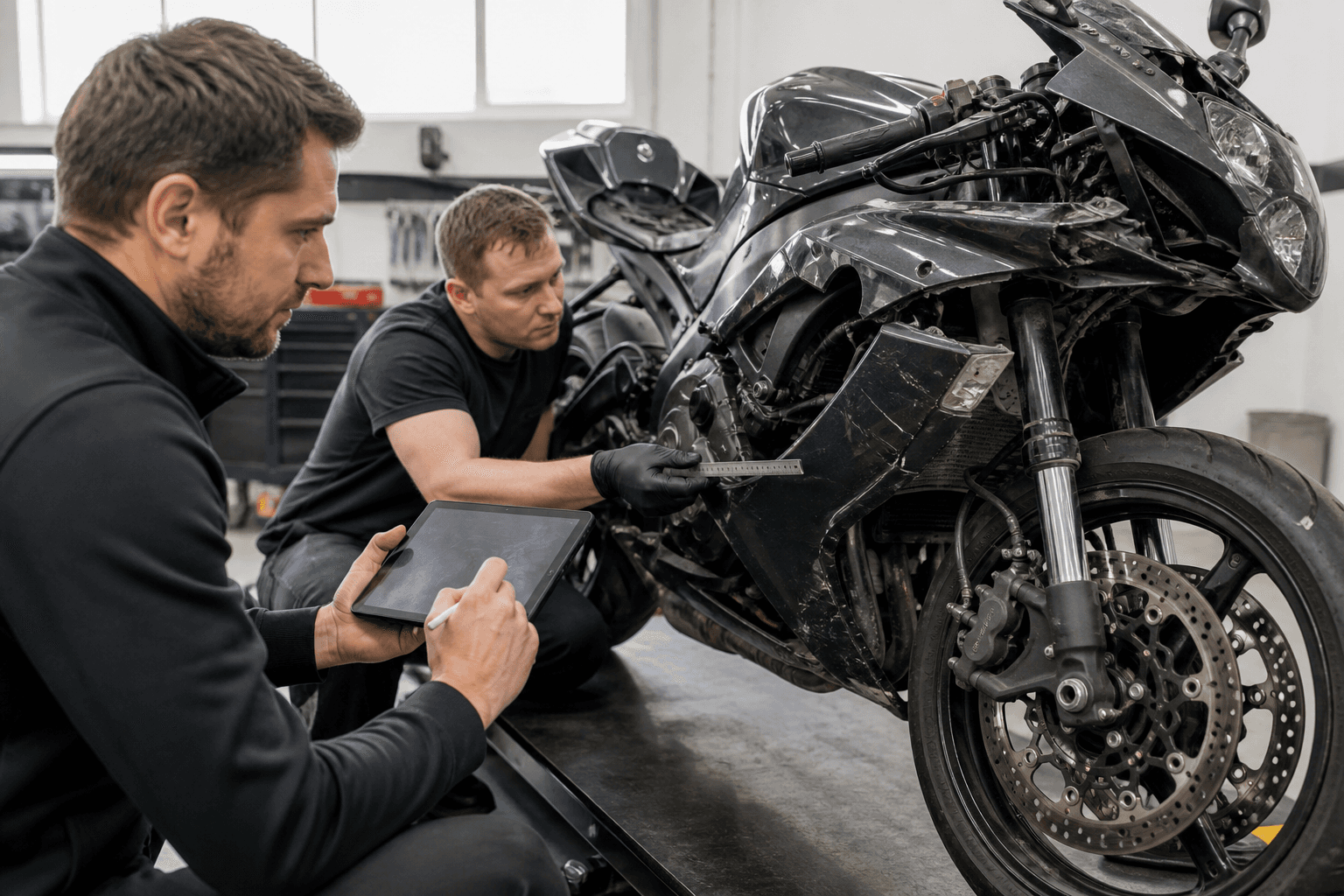
Full damages pursuit for a motorcycle accident claim
IV

Evidentiary discipline

Full damages pursuit

Beyond medical bills: lost wages, future care, pain and suffering, and the repair or replacement value of the motorcycle itself.

Recovery is evidence too

A rider absorbswhat a car body would have.

The same collision produces a categorically different injury, because almost nothing stands between the impact and the person. The treatment record, the lasting limitations, and the work you can no longer do are what put that difference on paper.

Between the impact and the personLayers of protection
Vehicle occupant4 layers
  • 01Crumple zone
  • 02Safety cage
  • 03Airbag array
  • 04Seatbelt

Four structures absorb the impact before the occupant does.

Rider3 layers
  • 01Helmet
  • 02Jacket + armour
  • 03Gloves + boots

Three thin layers, all worn. The rest of the span is open air.

Compensable impact7 categories
  • 01Emergency trauma care and hospitalization
  • 02Orthopedic surgery, grafting, and reconstruction
  • 03Rehabilitation and long-term therapy
  • 04Traumatic brain injury and cognitive care
  • 05Lost wages and diminished earning capacity
  • 06Motorcycle repair or total replacement value
  • 07Pain, suffering, and permanent disability

Every claim is evaluated on its own evidence and long-term effect.

The claim roadmap

From impact to resolution.

01

Secure

Preserve the scene, the gear, and the machine.

02

Counter

Answer the rider-bias narrative with evidence.

03

Value

Account for every source of recovery available.

04

Resolve

Negotiate from a trial-ready position.

Motorcycle accident FAQ

Clear answers, before the next move.

These come up in almost every rider matter. If yours is not here, ask it directly — the answer is free.
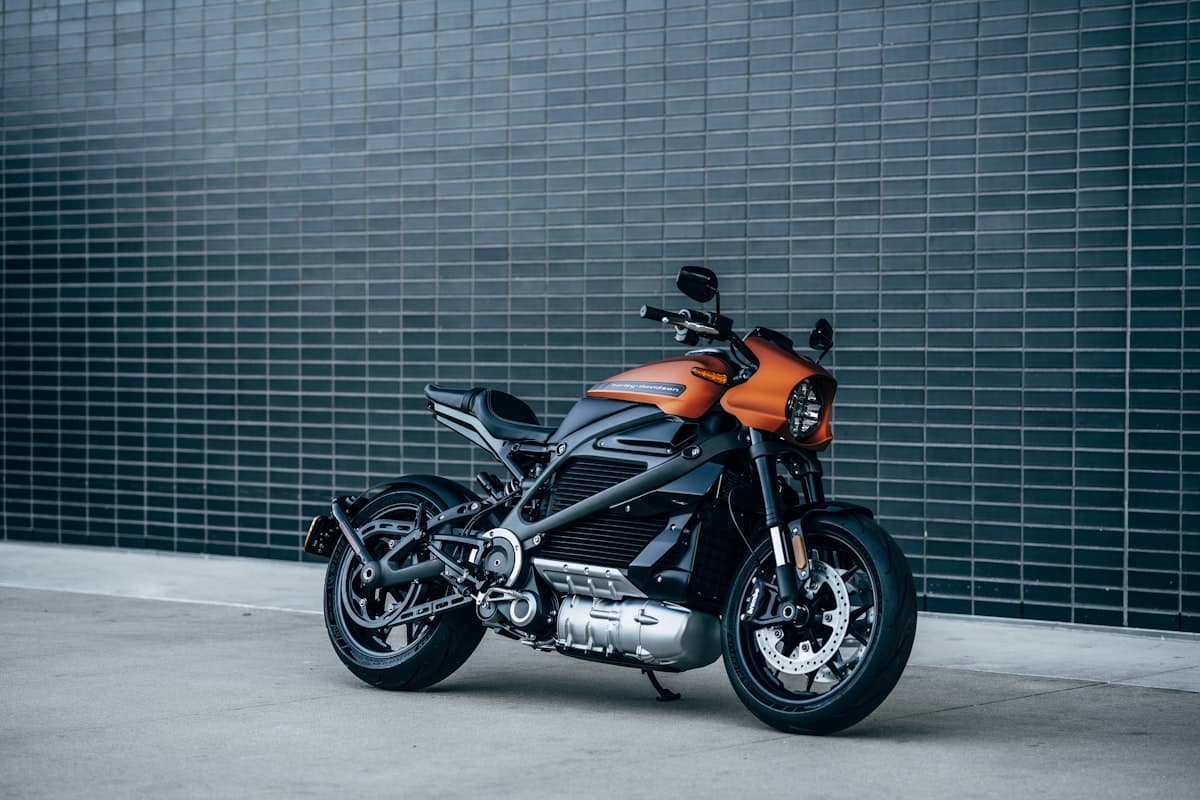
Motorcycle rider on a Los Angeles road

Confidential consultation. No upfront fee. No fee unless we recover.

California requires all riders to wear a DOT-compliant helmet. If you were not wearing one, an insurer may attempt to reduce your recovery by arguing contributory negligence. Whether a helmet would have changed a particular injury is a medical question, and we answer it with treating physicians and expert testimony rather than letting the assumption stand.
Lane splitting is legal in California under guidelines established by the California Highway Patrol. Splitting lanes does not, by itself, establish fault. We document lane position, speed, and the surrounding traffic carefully so that a lawful riding decision is not converted into an admission.
A police report is a starting point, not a verdict. We regularly supplement and challenge inaccurate reports with witness accounts, dashcam and surveillance footage, physical evidence, and expert reconstruction. Officers reach conclusions quickly and with incomplete information; that assessment is not binding.
It depends on the severity of the injuries and the insurer's posture. We do not push a settlement before your medical situation has stabilized, because the full cost of the injury is not knowable until then. Some cases resolve in months; those requiring litigation take longer. You will know where yours stands throughout.

Every crash has details these answers cannot cover. Tell us what happened and we will address yours specifically.

Ask your question
Your next move can be informed

Let us review the crash, the coverage, and what comes next.

The consultation is free, confidential, and carries no obligation. Tell us what happened and we’ll tell you, honestly, where you stand.

Available 24/7 · Direct attorney access · No fee unless we recover