
01
Property owner
Structure and retained repairsDid the lease leave the condition in the owner's control?
Deed · lease · insurance policy
Premises cases are decided on what the owner knew, or should have discovered, about a hazard on their property — and on how much of that record still exists when we start.
Case focus
Condition. Notice. Control.
2 years
Standard filing deadline
6 months
If a public entity owns it
Days
Before footage is overwritten
A property owner rarely admits knowing about a hazard. We prove notice through the records created by ordinary inspections, complaints, repairs, and surveillance.

A customer complaint, employee observation, incident report, or work order placed the condition directly in the property's hands.
Complaints · emails · staff testimony
The condition remained long enough—or happened often enough—that a careful inspection program would have discovered it before the injury.
Inspection gaps · video · recurring repairs
Open any condition to see the duty the property owner owed and the records that establish whether they met it.
The deed is only the beginning. Leases, management agreements, and work orders reveal who could inspect the area, repair the condition, or warn visitors before someone was hurt.

We follow the decisions that shaped the space.
Did the lease leave the condition in the owner's control?
Deed · lease · insurance policy
Who scheduled upkeep, received complaints, and hired vendors?
Management agreement · work orders
Who created, used, or monitored the area day to day?
Lease terms · staffing and sweep logs
Did repair, cleaning, or construction create the hazard?
Scope of work · invoices · site photographs
Who could inspect it, repair it, warn about it, or close the area? That authority—not the name on the building—is where responsibility begins.
Most hazards are repaired quickly. The first objective is to preserve what existed, where it was, who was told, and how long there was to respond.
Wide · detail · scale
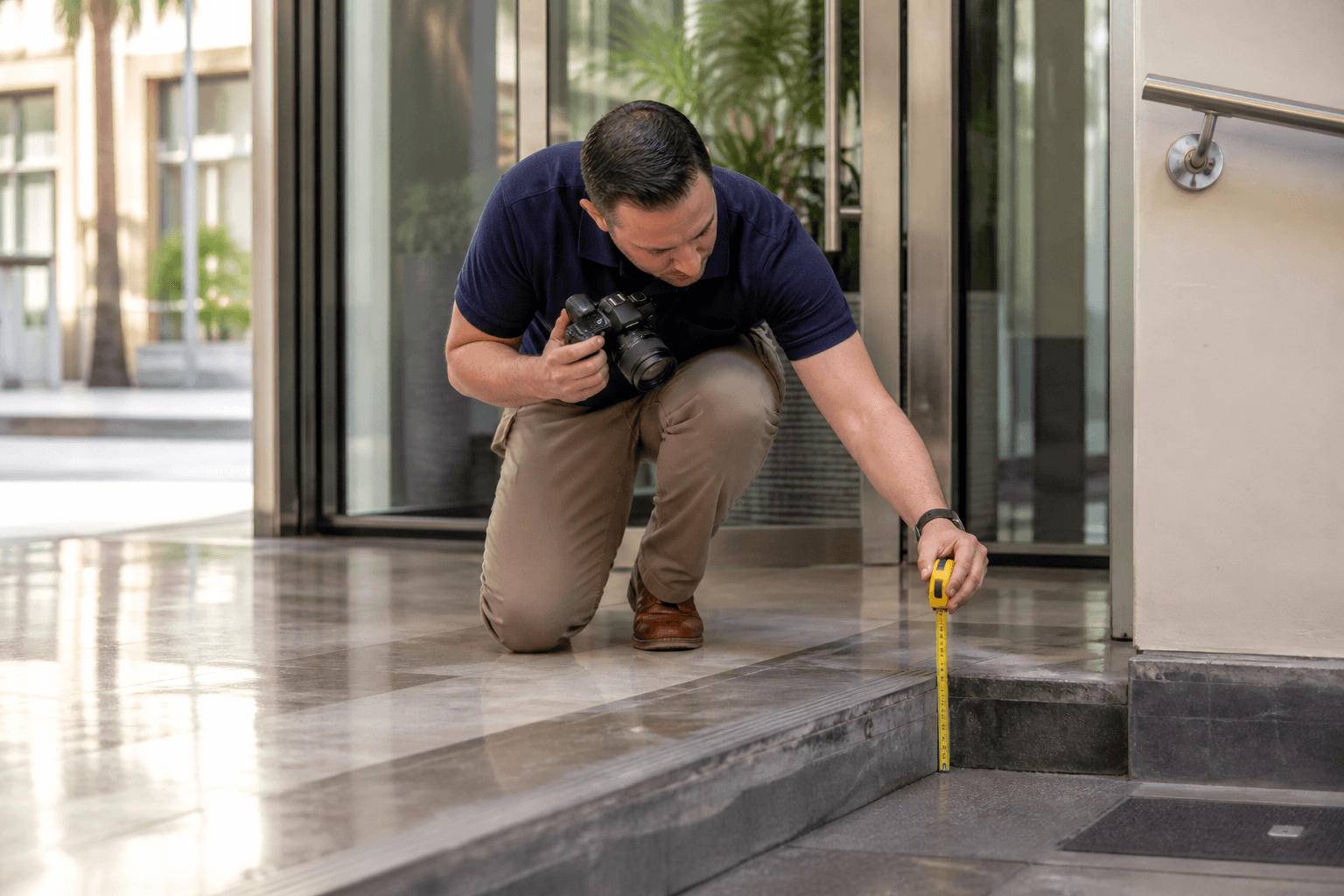
Capture the hazard itself, its position in the property, and a reliable reference for size before anyone alters it.
Establishes what existed
Date · location · personnel
Report what happened, identify who received the report, and request a written copy or reference number.
Fixes the event in time
Camera · retention · demand
Identify every useful camera and send a preservation demand before the system overwrites the relevant window.
Shows duration and response
Shoes · clothing · damaged items
Store what you were wearing without cleaning, repairing, or using it again so its condition cannot be disputed later.
Answers comparative-fault claims
Repairs change the scene.They do not erase the claim.
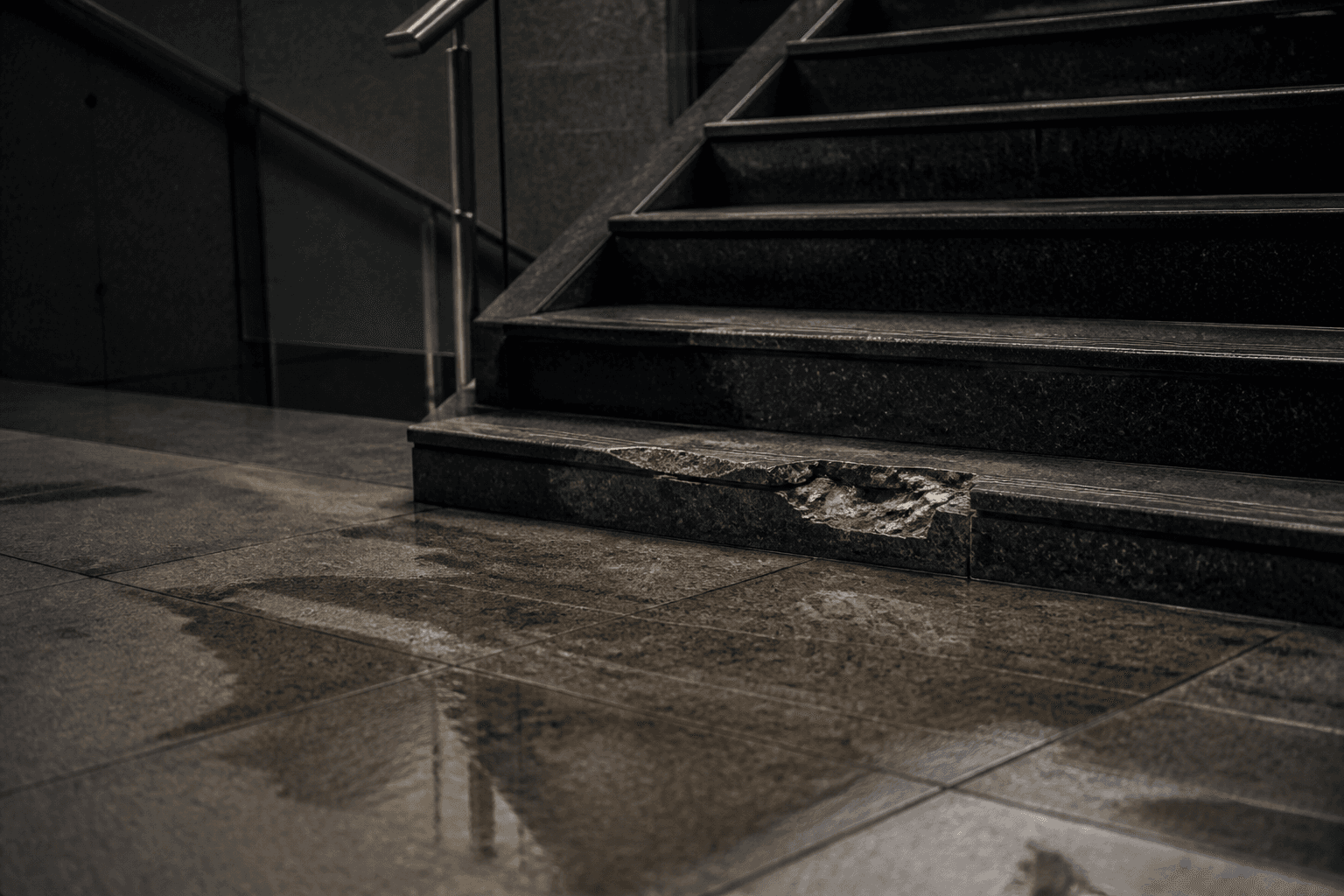
Maintenance records, earlier complaints, work orders, and witness accounts can reconstruct a condition after it has been corrected.
Maintenance records
What was serviced, and when
Earlier complaints
Whether anyone raised it before
Work orders
What the property chose to fix
Witness accounts
What people saw at the time
These come up in almost every property matter. If yours is not here, ask it directly — the answer is free.
Confidential consultation. No upfront fee. No fee unless we recover.
Every property is controlled differently. Tell us where it happened and we will work out who answers for it.
Ask your questionThe consultation is free, confidential, and carries no obligation. Tell us what happened and we’ll tell you, honestly, where you stand.
Available 24/7 · Direct attorney access · No fee unless we recover